
Dubai Property Market 2025 | Is the Boom Just Beginning or Are We Headed for a Correction?
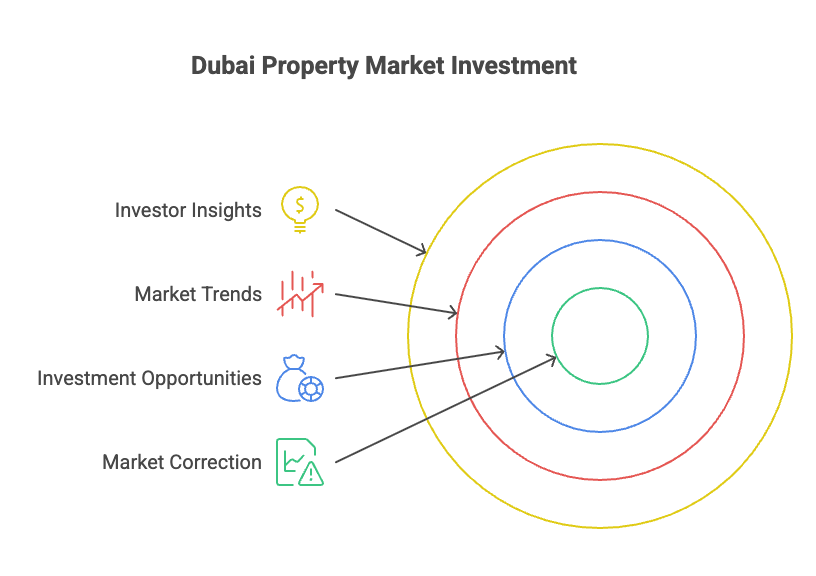
The question on every investor’s mind: Is Dubai’s real estate market boom just getting started, or are we headed for a market correction? This post will break down the market trends shaping Dubai’s real estate in 2025, highlight key opportunities, and share critical insights for anyone considering an investment, whether you’re a seasoned investor or just curious about this dynamic market.
General Market Outlook for 2025
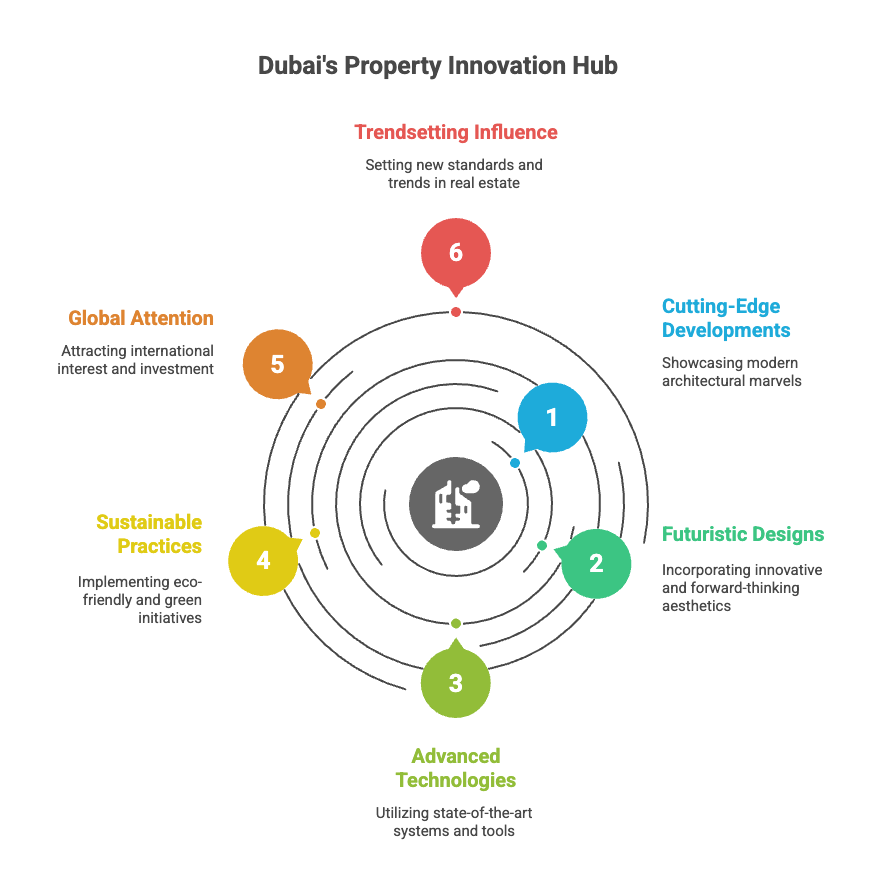
While Dubai’s property market experienced a significant boom post-COVID, it is still steadily increasing. This sustained growth is supported by several key factors:
- Government Initiatives: Programs like the UAE Golden Visa and accessible residency options, particularly for retirees seeking a sunnier lifestyle and safety, continue to attract people to Dubai.
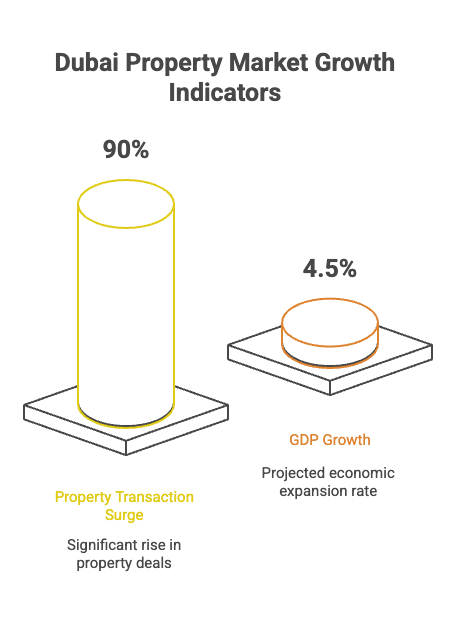
- Property Transaction Surge: In Q3 2024, Dubai recorded a 90% year-on-year increase in property transactions, a trend expected to continue steadily into 2025, perhaps not at the same high rate as previous years but with consistent growth.
- Increased Foreign Direct Investment (FDI): New regulations that enable more foreign ownership in Dubai and the UAE are making it easier to buy properties, offering good benefits. This is expected to significantly increase FDI, with more foreigners coming from Europe, Asia, and Russia.
- Expanding Economy: Dubai’s GDP is projected to grow by 4-5% year-on-year in the upcoming years, which will directly boost the property market and the real estate economy.
Key Trends Driving Growth
Several significant trends are fueling the current growth in Dubai’s real estate market:
- Sustainability and Smart Developments:
Developers are increasingly adopting smarter development solutions and eco-friendly practices, such as LEED-certified buildings, solar systems, and smart energy meters.
Over 40% of new developments planned for 2025 include smart home features.
Government programs like the Dubai Clean Energy Strategy 2025 aim to make the city more sustainable, promoting green developments and increasing greenery in new areas like Dubai Hills and Dubai Creek Harbor, enhancing livability.
- Luxury Real Estate on the Rise:
The luxury real estate sector continues its upward trajectory, with luxury buildings experiencing an approximate 16% year-on-year increase, especially in ultra-luxury locations like the Palm Jumeirah.
There’s a surge in branded residences, such as the Bulgari Residence, which target High Net Worth Individuals (HNWIs). These individuals are not only investing but also often become end-users, further driving this sector’s growth.
- Off-Plan Investments Driving Demand:
Lower down payments for off-plan developments are making them increasingly attractive. This appeals not only to very rich individuals but also to the middle class from Europe.
Areas like Dubai Creek Harbor and Jumeirah Village Circle are particularly appealing for these investments.
- Emerging Hotspots:
Dubai South is becoming a major emerging hotspot due to the city’s expansion and the upcoming larger airport. While it’s considered a longer-term investment because the airport’s full operation is still a few years away, projects by developers like Emaar in this area are selling out in minutes, indicating high interest and future growth. The Expo area and other locations in close proximity to Dubai South are also part of this emerging trend.
Risks and Challenges
While the outlook is positive, it’s crucial to be aware of potential risks and challenges:
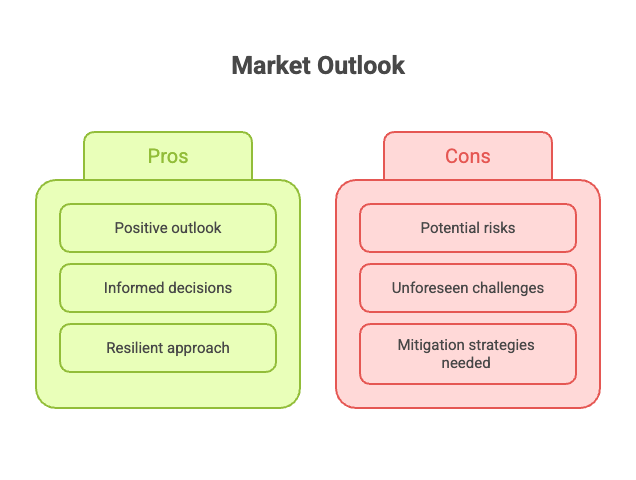
- Over-supply Risk: Historically, over-supply has been a significant concern. With many investors focusing primarily on luxury developments, there’s a risk that mid-tier apartments might get unnoticed, potentially leading to an imbalance in property offerings.
- Global Economic Changes and Oil Price Fluctuations: Global economic shifts and volatility in oil prices could influence Dubai’s market. Although the government is implementing diversification strategies to sustain growth, these external factors can still have an impact.
- Rental Regulations: Stricter rental laws, such as caps on rental increases for tenants, could make long-term rentals less attractive for landlords. This might encourage more landlords to consider short-term rentals like Airbnb instead.
Long-Term Predictions and Innovations
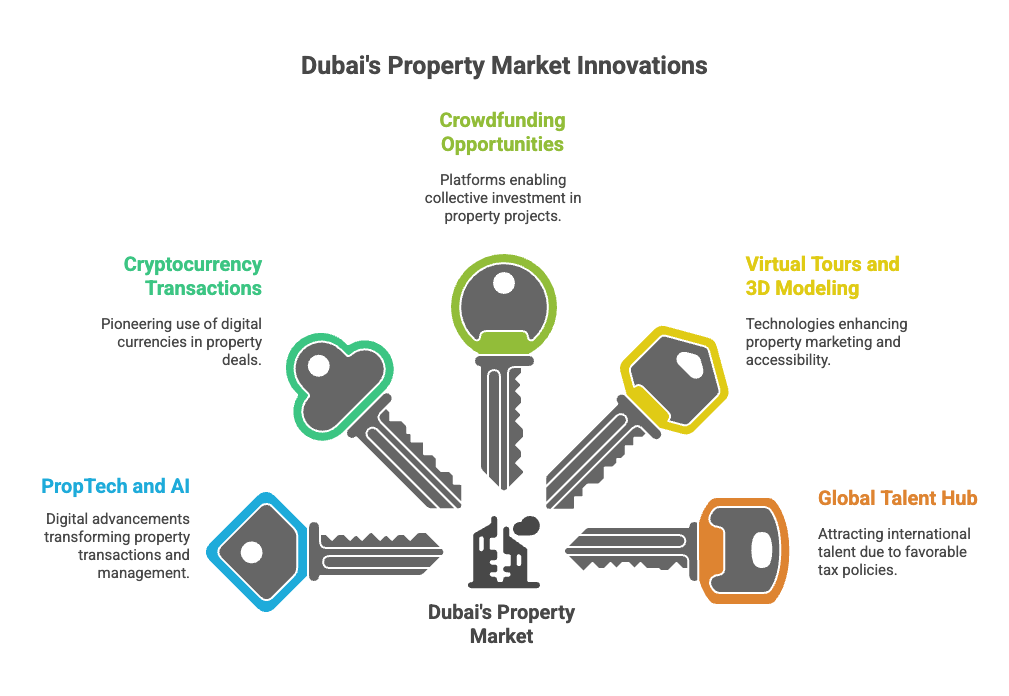
Dubai is at the forefront of innovation within the property market:
- PropTech Transformations and AI: Dubai is a leader in property digitization, with PropTech and AI significantly influencing the market.
- Cryptocurrency Transactions: Dubai was the first market to introduce property transactions using cryptocurrencies like Bitcoin.
- Crowdfunding Opportunities: PropTech platforms enable investing through crowdfunding, such as Smart Crowd.
- Virtual Tours and 3D Modeling: These technologies are expected to dominate property marketing, making it much easier for overseas investors to explore and purchase properties without needing to travel.
- Global Talent Hub: Dubai continues to solidify its position as a global talent hub, attracting remote workers and individuals looking to register companies (sole trading companies or LTDs) due to the absence of taxes. This influx of talent will increase demand for flexible residential options and contribute to price growth.
Conclusion
Dubai’s property market in 2025 presents a mix of promising growth opportunities and manageable challenges. To succeed, investors must stay ahead of trends and understand the nuances of this dynamic market, whether focusing on sustainable homes or luxury investments.